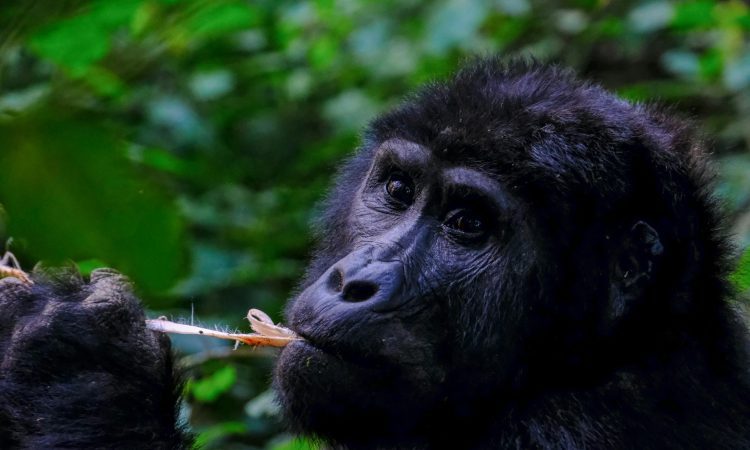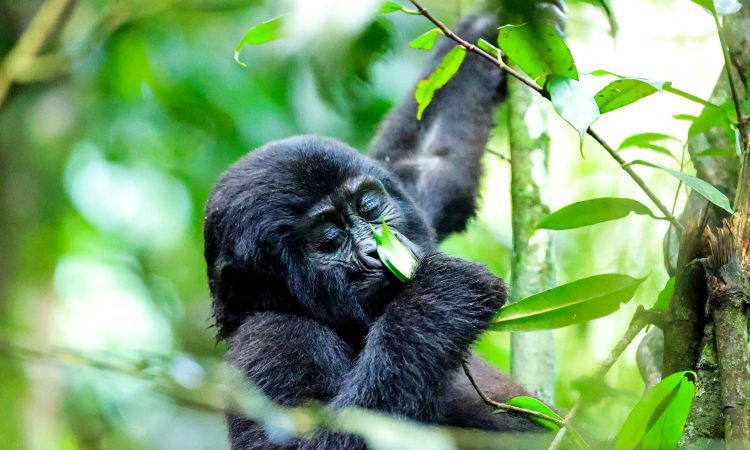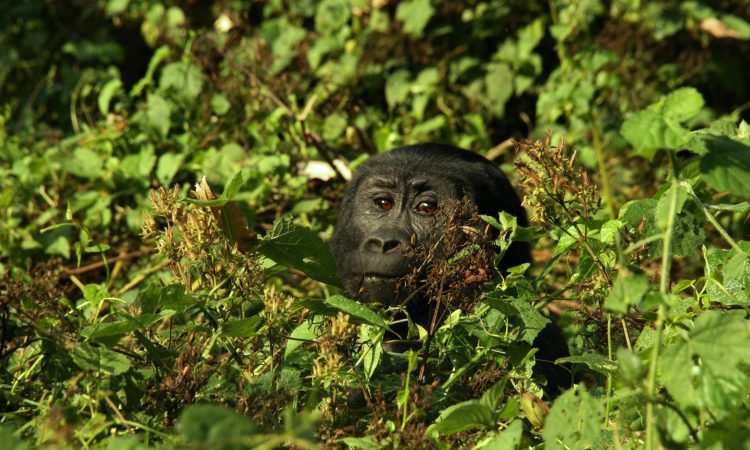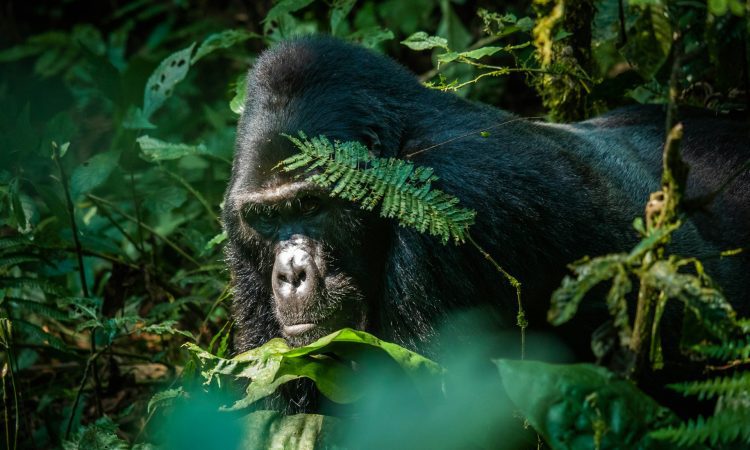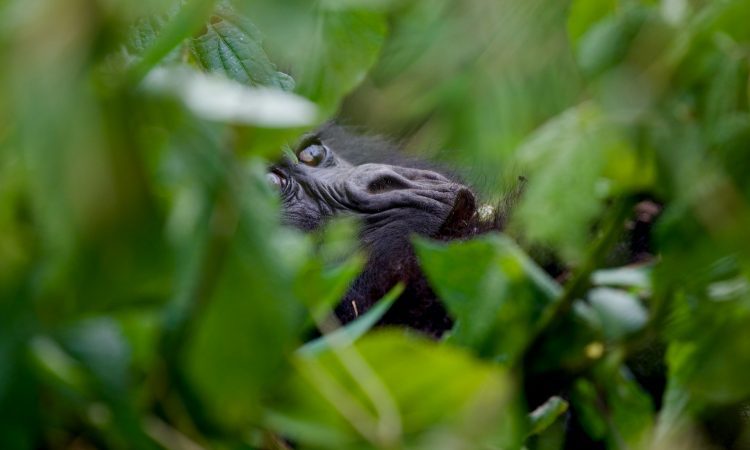

Why Do Mountain Gorillas Beat Their Chests? Mountain gorillas are magnificent creatures belonging to the Eastern gorilla species. There are about 1,063 mountain gorillas remaining in the wild, with Bwindi Impenetrable National Park having almost half of the population—about 459 individuals.
Mountain gorillas live in families of about 5 to 30 individuals, led by a dominant male called a silverback. The silverback is responsible for protecting the family, mating with females, and deciding sleeping and feeding times.
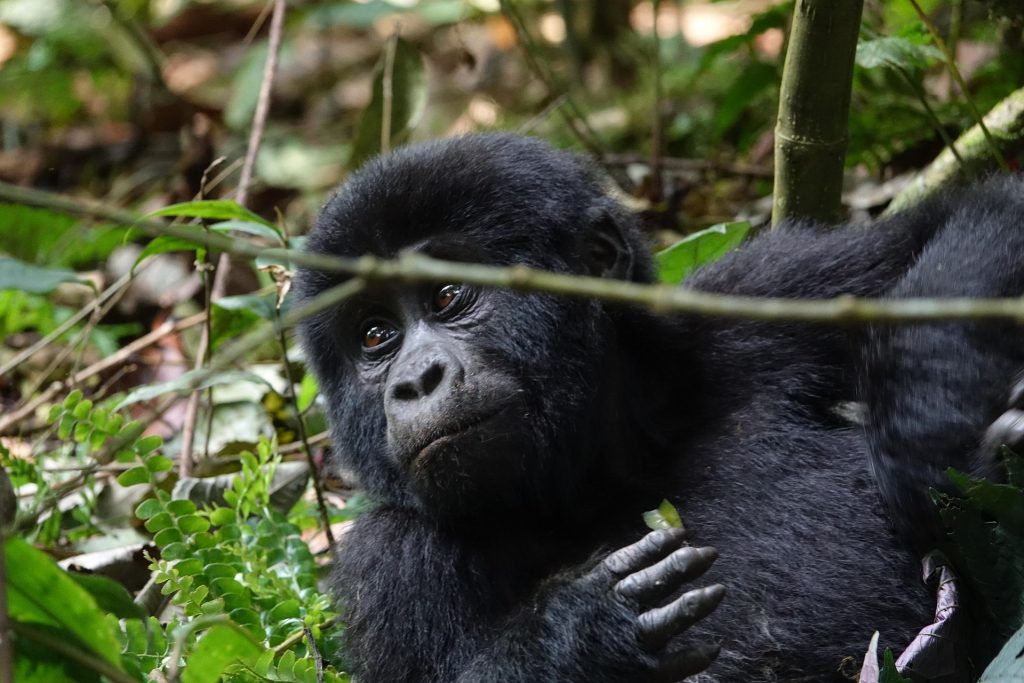
Mountain gorillas are friendly, herbivorous apes with broad shoulders, strong hands, and tiny eyes.
They live in forests and share 98.3% of their DNA with humans.
Mountain gorillas use both vocal and non-vocal methods of communication, one of which is chest beating.
Chest beating among mountain gorillas involves a rhythmic pounding of their chests with cupped hands.
This action is most commonly done by silverbacks.
There are different reasons why a silverback beats his chest, including:
- Warning or Challenging Rivals: If a young silverback or black-back challenges the dominant silverback, the silverback beats his chest to send a warning sound before an attack. In some cases, the young one may retreat or continue the fight.
- Scaring Off Enemies: Chest beating is done to scare off enemies. The enemy may either take it as a threat and back off or decide to challenge the silverback, leading to a fight.
- Asserting Dominance: Chest beating is a powerful acoustic signal that can travel over long distances. It shows the silverback’s strength, deters rivals, and asserts his authority.
- Attracting Mates: Chest beating acts as a signal of fitness and dominance. It helps females assess the silverback’s suitability for mating based on his size and strength, increasing his chances of reproduction.
- Territorial Defense: Chest beating creates a loud, resonant sound that can be heard over long distances. It communicates territorial boundaries to other gorilla families and potential intruders.
- Social Interaction Among Black-backs: Blackbacks use chest beating to practice and refine their social skills. It allows them to receive feedback from other group members and navigate social hierarchies.
- Play and Development: Infant and juvenile gorillas engage in chest beating during play. This helps them experiment with their physical abilities in a social context.
Chest beating is a very important mode of communication with great leadership and social significance.